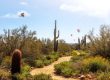
If you have ever wondered which trees truly belong in the Phoenix Valley, the answer starts with the Sonoran Desert. Native trees here are not just plants that can survive the heat. They are species that evolved for it. That matters, because native trees usually handle our long summers, intense sun, desert soils, and dry conditions far better than trees brought in from somewhere else.
They also tend to look right here. A native desert tree belongs in the landscape in a way that is hard to fake. It fits the light, the colors, and the rhythm of the Valley.
PALO VERDE IS THE CLASSIC PHOENIX TREE
If there is one tree people most associate with the Phoenix area, it is palo verde. In fact, there are a couple of native palo verde species that matter here. Blue palo verde and foothills palo verde are both native to the Sonoran Desert and are well known across the Valley.
People love palo verde trees for good reason. They bring that unmistakable desert look, they flower beautifully in spring, and once established they are well adapted to our climate. Their green bark is part of what makes them so distinctive, especially when summer stress would leave other trees looking tired and miserable.
MESQUITE IS ANOTHER TRUE DESERT FAVORITE
Mesquite is another major native tree in the Phoenix Valley. Velvet mesquite is one of the best known local natives, and it has long been valued for the shade it can provide and the strong desert character it brings to a yard.
Native mesquites often have a more natural, open shape than many people expect. That is part of their charm. They are not supposed to look stiff or overly formal. They are desert trees, and they wear that identity proudly. Screwbean mesquite is another native species tied to the broader desert region and is especially interesting for its twisted seed pods.
IRONWOOD IS ONE OF THE DESERT’S GREAT TREES
Ironwood is one of the most remarkable native trees in the Sonoran Desert. It is tough, slow growing, and deeply tied to the ecology of the region. It is not as quick to mature as some other landscape choices, but it is a real desert native with an understated kind of beauty.
For homeowners who want a tree that feels authentic to the land, ironwood has a lot going for it. It is one of those trees that may not shout for attention, but people who know desert plants tend to admire it.
A FEW OTHER NATIVE OR REGIONALLY NATIVE CHOICES
Depending on the exact setting, you may also hear about trees like whitethorn acacia and feather bush in Phoenix area planting discussions. These help round out the list of desert adapted trees commonly associated with native and Sonoran Desert style landscapes.
The important thing is not just picking a tree that can survive here. It is picking a tree that makes sense for the size of the space, the amount of shade you want, and the level of maintenance you can live with.
NATIVE TREES MAKE DESERT LANDSCAPING EASIER
One of the best things about choosing native trees is that they usually ask less of you once they are established. They are not magic, and they still need proper watering and care, especially early on, but they are far better matched to Valley conditions than many imported landscape trees.
That usually means a healthier tree, a more natural looking yard, and fewer regrets down the line.
BE TREE FRIENDLY!
Looking for the right native tree for your Phoenix Valley yard? Visit A and P Nursery for expert help choosing desert trees that fit your space, your style, and the way you actually live outdoors.
REFERENCES
City of Phoenix, Shade Trees and Other Plants
City of Phoenix, Phoenix’s Urban Forest
University of Arizona Cooperative Extension, Mesquite and Palo Verde Trees for the Urban Landscape
Arizona Sonora Desert Museum, Sonoran Desert Region