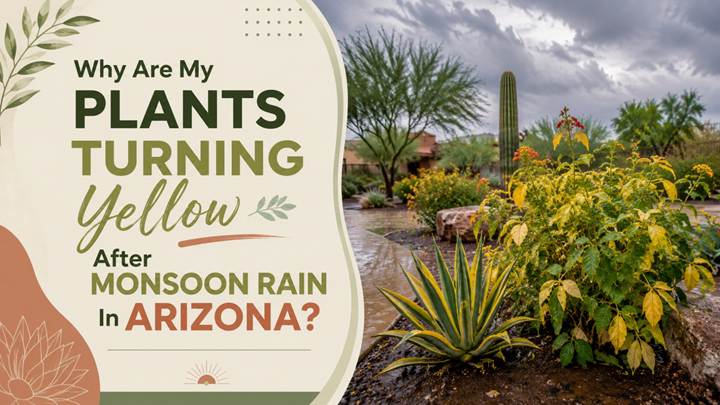
Arizona monsoon rain can make a dry landscape look refreshed almost overnight. A few days later, homeowners may notice pale foliage, yellow leaves, drooping stems, or plants that appear weaker than before the storm. The natural reaction is often to add more water or fertilizer, but either choice can make the problem worse when the cause has not been identified.
Yellow leaves are a symptom rather than a diagnosis. Soil moisture, drainage, nutrient availability, heat stress, insects, and disease can all change leaf color. The pattern of yellowing and the condition of the soil provide the best starting clues.
Too Much Water Can Look Like Thirst
An overwatered plant may wilt even though the soil is wet. Roots need both moisture and oxygen. When soil remains saturated, the air spaces around the roots fill with water, reducing the plant’s ability to absorb what it needs.
Common signs include yellow or pale green foliage, soft new growth, dropping leaves, damp soil, algae, mushrooms, or a musty smell near the base. Do not assume a wilted plant needs another irrigation cycle. Check the soil several inches below the surface first.
Check The Soil Before Changing Your Timer
Monsoon rainfall is often uneven. Roof runoff, grading, walls, and hard surfaces can direct extra water into one planting bed while another part of the yard stays comparatively dry.
After meaningful rain, delay automatic irrigation until the root zone begins to dry. A screwdriver or soil probe can help you judge moisture below the surface. If it slides easily into cool, damp soil, the plant may not need more water.
Potted plants should be checked separately because containers can dry quickly or hold water around the roots when drainage holes are blocked.
Poor Drainage Can Trap Monsoon Water
Heavy East Valley soil and caliche can prevent water from moving downward. A planting hole may then behave like a basin, keeping the root ball wet after the surrounding surface looks dry.
Look for standing water, consistently soggy soil, or yellowing that begins after every heavy storm. Improving drainage may require correcting the grade, opening a blocked outlet, raising the planting area, or moving a plant that cannot tolerate the location.
The Yellow Pattern May Reveal A Nutrient Problem
When the entire leaf becomes pale, a nitrogen shortage may be involved. When the tissue turns yellow but the veins remain greener, iron availability may be the issue. Arizona’s alkaline soils can make some nutrients difficult for plants to use, even when those nutrients are present.
Avoid applying a large dose of fertilizer during severe heat or while roots are waterlogged. First correct moisture and drainage. Then choose a product suited to the plant and follow the label carefully. More fertilizer is not automatically better.
Watch For Disease And Insect Activity
Warmth and humidity can encourage leaf spots, mildew, and other plant problems. Inspect both sides of the leaves for spots, fuzzy growth, webbing, insects, or damaged stems. Remove fallen diseased material and avoid repeatedly wetting foliage with sprinklers.
Severely damaged or rapidly declining plants may need a closer inspection before treatment is selected.
Help Your Landscape Recover Safely
Begin by pausing unnecessary irrigation, checking drainage, and removing broken or badly damaged growth. Keep mulch away from trunks and plant crowns so moisture does not remain trapped against them. Wait for the soil condition to improve before fertilizing.
Take photographs and bring a leaf sample to a local nursery when the cause is unclear. Knowing the plant variety, sun exposure, watering schedule, and timing of the symptoms will make the advice more useful.
Visit A&P Nursery For Local Plant Care Help
Yellow leaves after monsoon rain do not always mean a plant is dying, but they should not be treated by guesswork. The experienced team at A&P Nursery can help you compare watering, drainage, soil, fertilizer, and replacement plant options for East Valley conditions. Visit one of our four locations or call Gilbert at (480) 892 7939, Queen Creek at (480) 655 5789, West Mesa at (480) 839 5362, or East Mesa at (480) 396 8800.
References
A&P Nursery: Plant Watering Guidelines
Arizona Municipal Water Users Association: Watering Schedules
Arizona Municipal Water Users Association: Fertilizing Landscape Plants
University Of Arizona Cooperative Extension: Harvesting Rain