
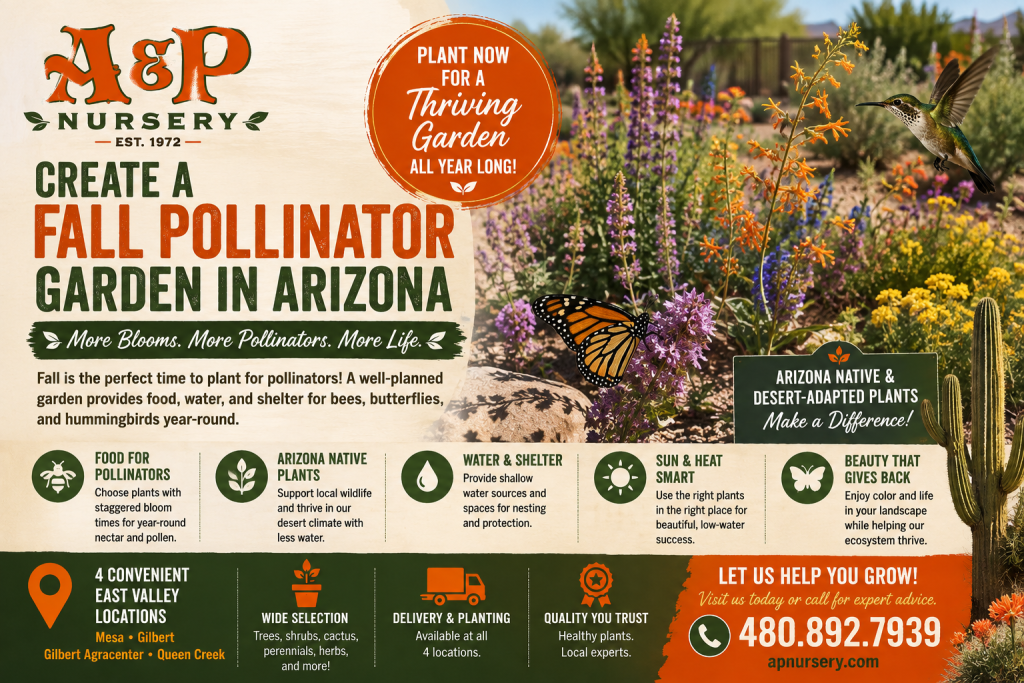
How To Create A Fall Pollinator Garden In Arizona
September in the East Valley may not feel like autumn. Afternoon temperatures can remain high, yet it is a useful time to plan a pollinator garden, check irrigation, and begin planting as conditions moderate.
A fall pollinator garden is not simply a bed filled with flowers for one month. It should provide nectar, pollen, shelter, and host plants across several seasons while remaining manageable in a low desert yard.
Choose Plants For More Than One Bloom Period
Pollinators need food at different times of year. A garden that looks spectacular for three weeks and empty for the remaining months offers limited support. University of Arizona guidance recommends selecting a variety of plants with overlapping bloom periods so something is available throughout the year.
Start with a mix of perennials, shrubs, ground covers, and a few seasonal flowers. Autumn sage, desert marigold, globe mallow, chuparosa, fairy duster, penstemon, desert lavender, and suitable milkweeds can all contribute to a desert pollinator design. Choose healthy plants that match the sun and space in your yard.
Repeat plants rather than buying one of everything. Small groups are easier for bees and butterflies to find and usually create a cleaner landscape design.
Include Native And Desert Adapted Choices
Native plants developed alongside local insects, birds, soils, and weather patterns. Many provide pollen, nectar, nesting material, or caterpillar food that ornamental plants may not supply. Desert adapted nonnative plants can also be useful when they are well behaved and suited to the site.
Milkweed deserves special attention because it serves as a host plant for monarch caterpillars. Flowering plants nearby provide nectar for adult butterflies. Use a species appropriate for the low desert and ask about its mature size, seasonal appearance, and care before planting.
Avoid choosing solely by flower color. A beautiful plant placed in the wrong exposure may struggle, bloom poorly, or need much more water than expected.
Study Sun, Heat, And Reflected Light
Six hours of sun in an open bed is not the same as six hours beside a west facing block wall. Masonry, gravel, driveways, and patios can hold and reflect heat. A plant labelled for full sun may still need protection from the harshest afternoon exposure while becoming established.
Watch the proposed garden for a full day. Note morning sun, afternoon shade, roof runoff, sprinkler overspray, and areas where water collects. Group plants with similar light and water requirements so one irrigation zone is not trying to satisfy completely different needs.
September planting should still be approached carefully during a hot spell. Water the root ball thoroughly, plant in the cooler part of the day, and provide temporary shade when a newly installed plant shows heat stress.
Add Water Without Creating A Hazard
Pollinators need water, but a deep open container can become unsafe or quickly attract mosquitoes. A shallow dish with stones or pebbles gives insects landing places. Refresh the water frequently and keep it clean.
Drip irrigation should reach each new root ball rather than wetting empty soil several feet away. As plants grow, move emitters outward and adjust the schedule to encourage a wider root system. Mulch can reduce evaporation, but keep it away from stems and trunks.
Leave Some Shelter
A perfectly stripped garden is not always the most useful habitat. Some native bees nest in bare ground, hollow stems, or small cavities. Butterflies may use shrubs and sheltered corners during heat.
Avoid removing every dry stem immediately. Keep a few undisturbed areas where practical, while still controlling weeds and maintaining a tidy appearance around paths and patios.
Use pest controls carefully. Before spraying, identify the insect and consider whether physical removal, pruning, or a targeted treatment would solve the problem with less disruption to pollinators.
Build Your Arizona Pollinator Garden With A&P Nursery
A&P Nursery offers trees, shrubs, cactus, bedding plants, herbs, soil products, mulch, and local advice at four East Valley locations. Bring photographs of the site and note its sun exposure, space, and irrigation. Call 480 892 7939 or visit A&P Nursery in Mesa, Gilbert, or Queen Creek to choose plants that can provide color and pollinator value beyond a season.
Live References
A&P Nursery Bedding Plants
https://www.apnursery.com/mesa-bedding-plants.htm
A&P Nursery Plant And Tree Selection
https://www.apnursery.com/phoenix-plant-list.htm
University of Arizona: Plants For Pollinators In The Low Desert
https://extension.arizona.edu/publication/plants-pollinators-low-desert-arizona
University of Arizona: Flower Planting Guide For The Low Desert
https://extension.arizona.edu/publication/flower-planting-guide-low-desert
Xerces Society: Native Plants For Southwest Sonoran Desert Pollinators